Flood Restoration Services: Emergency Response Steps Within the First 24 Hours
When flooding strikes your home or business, the first 24 hours are the most critical. What you do — or don’t do — in this window largely determines whether your property bounces back quickly or faces long-term structural damage and mould growth. Here’s a step-by-step guide to what should happen in the crucial first day after a flood.
Ensure Safety First
Before anything else, safety comes first. If floodwater is near electrical outlets, switchboards, or appliances, turn off the power at the mains if it’s safe to do so. Avoid walking through standing water if there’s any risk of electrical current, and be cautious of structural damage such as sagging ceilings or weakened flooring. If the flooding involves sewage or contaminated water, avoid direct contact and keep children and pets away from the area entirely.
Stop the Source and Call for Help
If the flooding is caused by a burst pipe, appliance failure, or plumbing issue, shut off the water supply immediately. For storm-related flooding, this step isn’t possible, but calling a professional flood restoration team should happen right away regardless of the cause. Sydney weather can escalate quickly, and early intervention prevents water from spreading further into walls, subfloors, and furniture.
Document the Damage
Before any cleanup begins, take clear photos and videos of all affected areas — flooring, walls, furniture, electronics, and personal belongings. This documentation is essential for insurance claims and gives restoration technicians a clear starting point for assessment. Note the time flooding began, if known, as this helps determine the water damage category and urgency of drying.
Water Extraction Begins
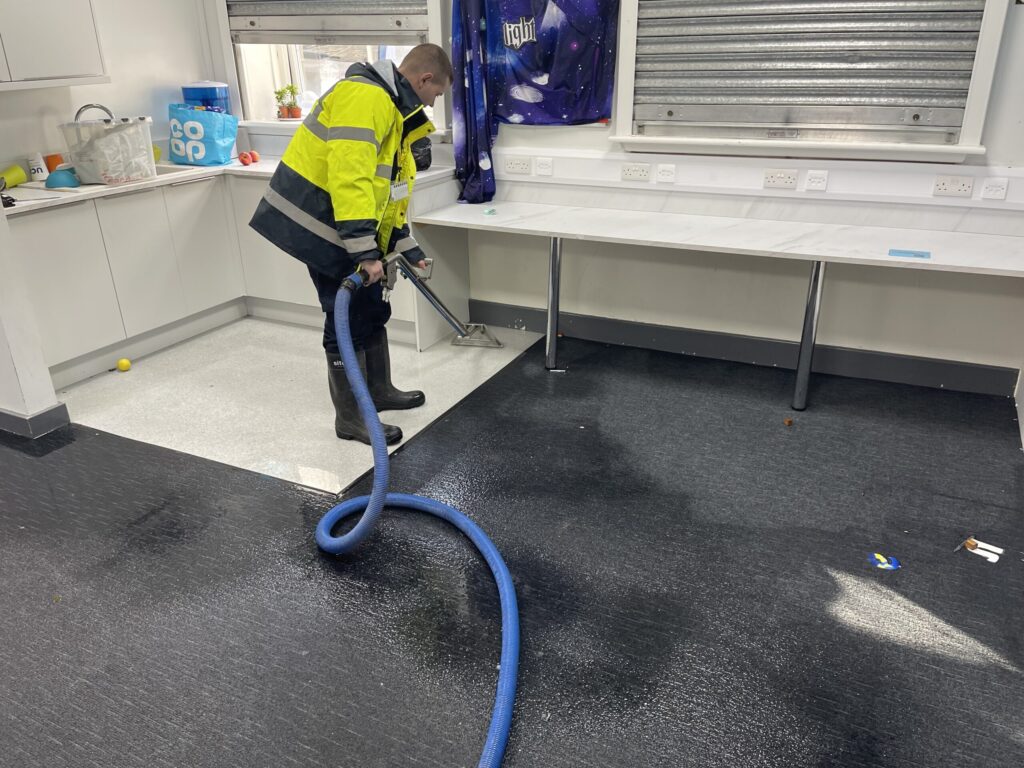
Once a professional restoration team arrives, the first major task is water extraction. Using truck-mounted or portable extraction units, technicians remove standing water quickly to limit how deep moisture penetrates into building materials. The longer water sits, the more it saturates flooring, drywall, and insulation, so this step is time-sensitive.
Moisture Assessment and Categorisation
Technicians use moisture meters and thermal imaging cameras to identify exactly where water has travelled — including inside walls and under flooring that may look dry on the surface. Water is also categorised (clean, grey, or black) based on its source and contamination level, which determines the appropriate safety and cleaning protocols.
Drying Equipment Deployment
Industrial-grade dehumidifiers and air movers are strategically placed throughout the affected area to begin the drying process. This equipment works far more effectively than household fans, drawing moisture out of materials like timber, carpet, and plasterboard. Drying typically continues over several days, with technicians monitoring moisture levels regularly to prevent mould growth.
Ongoing Monitoring and Restoration
While the first day focuses on stopping damage and beginning extraction, restoration continues with daily moisture checks, adjustments to drying equipment, and eventually repairs or replacement of damaged materials. Mould prevention treatments may also be applied to vulnerable areas as a precaution.
Why Speed Matters
Mould can begin growing within 24 to 48 hours in the right conditions, and Sydney’s humid climate only speeds up this timeline. Acting fast — and calling certified professionals immediately — significantly reduces the risk of long-term damage, health hazards, and repair costs.
Trust Water Drying Experts for Rapid Response
When flooding hits, every hour matters. Water Drying Experts provides 24/7 emergency response across Sydney, arriving quickly with the equipment and expertise needed to manage every stage of restoration — from initial extraction to complete, thorough drying. Don’t wait for damage to worsen; call us the moment flooding occurs.